
Duplicate Supplier Invoice Detection and Payment Prevention Controls in the UAE
By Valusage Technical Practice
Editorial responsibility: Valusage Business Advisors Editorial Practice

Direct answer
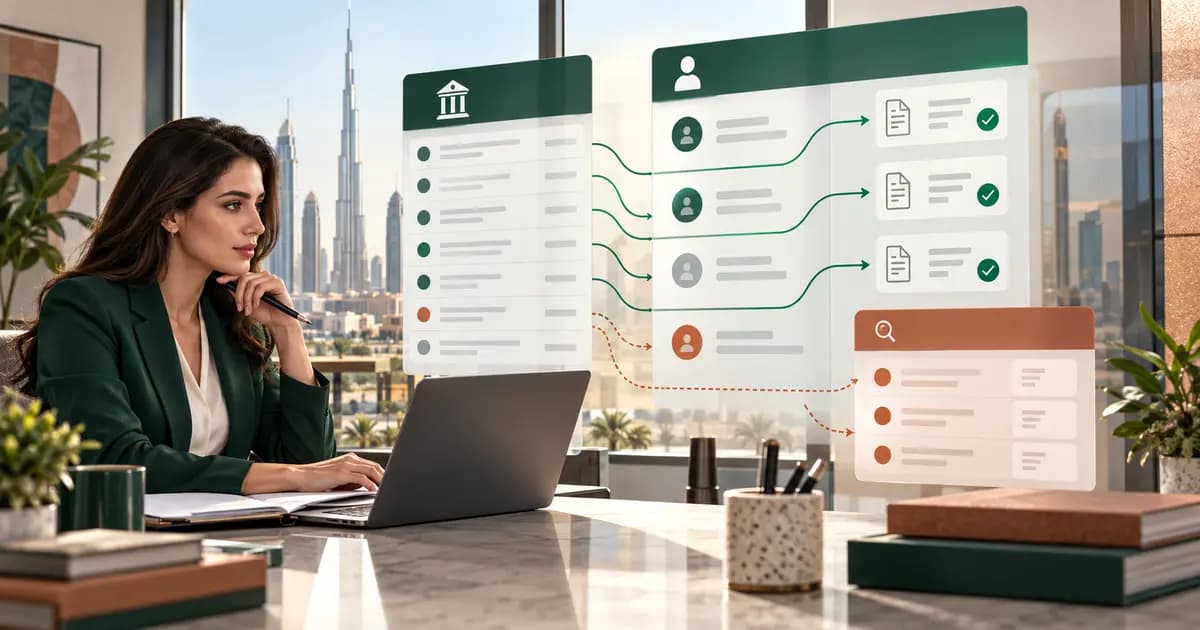
Duplicate supplier payments are best prevented through layered checks on supplier identity, legal entity, invoice number, normalized invoice number, date, currency, amount, purchase order, receipt and bank beneficiary before posting and again before payment release. Finance should block suspected matches for independent review, document valid exceptions such as corrected invoices, and monitor duplicates that bypassed the first control so the rule set improves.
Accounting close map
From information to a controlled decision
- 01Capture
- 02Reconcile
- 03Close
- 04Report
Illustrative evidence trend
Decision supportDuplicate invoices rarely look identical in the system. A supplier may add spaces or punctuation, resend an invoice to another employee, change the document date, use a different vendor record or submit the same charge as a statement line. A reliable process combines master-data, transaction and payment controls.
Normalise the invoice reference
Retain the original invoice number, then create a controlled comparison value that removes permitted spaces, punctuation and case differences. Search within the same supplier and across related or duplicate supplier records. Do not overwrite the source document merely to make the system accept it.
Check more than invoice number
Use several match combinations: supplier and invoice number; supplier, date and amount; purchase order, receipt and amount; bank beneficiary, currency and amount; and recurring invoice patterns. A single exact-match rule misses altered references, while an amount-only rule creates too many false positives.
Control supplier master duplicates
Before creating or reactivating a supplier, compare legal name, registration data, bank account, tax details where relevant, contact information and group ownership. Restrict master creation and bank changes. A duplicate vendor record can bypass an otherwise sound invoice-number control.
Block and review suspected matches
Route potential duplicates to an exception queue before posting or payment. Show both documents, match reason, purchase and receipt evidence, prior payment status and reviewer decision. The person who entered the invoice should not be the sole approver of the exception.
Distinguish corrections and recurring charges
A corrected invoice, instalment, recurring rent or resubmitted document may be valid. Link it to the original record and document whether the original was cancelled, credited, rejected or remains payable. Avoid deleting the audit trail to clear the warning.
Repeat the check before payment release
Run a second duplicate scan across the proposed payment batch, recently paid invoices and bank beneficiary data. Review split payments, repeated amounts, invoices paid outside the normal run and manual bank transfers. Require evidence before overriding a payment block.
Duplicate-payment prevention checklist
1. Normalise invoice references for comparison. 2. Search across supplier and related master records. 3. Use invoice, PO, receipt, amount and bank matches. 4. Block suspected duplicates before posting. 5. Review exceptions independently. 6. Link corrections to the original document. 7. Scan again before payment release. 8. Analyse every escaped duplicate and refine controls.
IAS 7 addresses information about cash flows and the Conceptual Framework addresses useful, faithfully represented financial information. This article focuses on accounts-payable prevention and evidence; the treatment of a specific invoice or dispute depends on its facts.
Editorial practice
Prepared by Valusage Technical Practice. Editorial responsibility rests with Valusage Business Advisors Editorial Practice under the published editorial and corrections policy.
Continue the decision
Services, evidence and next steps
Related control guidance
Continue with another evidence-led management review
 Industry GuidanceCash-on-Delivery and Courier Settlement Reconciliation Controls for UAE E-commerce →
 Industry GuidanceCustomer Loyalty Points and Gift Voucher Liability Reconciliation Controls in the UAE →
 Accounting and BookkeepingGoods-in-Transit, Receipt and Cut-Off Reconciliation Controls for UAE Importers →
 Accounting and BookkeepingCustomer Deposit and Unapplied Cash Reconciliation Controls in the UAE →
Professional boundary
This article is general information. It is not a filing opinion, legal advice, audit conclusion, investment recommendation or guarantee of authority acceptance or commercial outcome.
Which fields help detect duplicate supplier invoices?+
Compare supplier identity, normalized invoice number, date, currency, amount, purchase order, receipt and bank beneficiary using several match combinations.
Should a suspected duplicate invoice be deleted?+
No. Block it for review and retain the documents, match reason and decision so a valid correction or rejected duplicate remains auditable.
Why run a duplicate check again before payment?+
A second check can detect split batches, manual transfers, recently paid invoices and master-data changes that were not visible when the invoice was first entered.
Valusage email updates
Receive related Valusage guidance
Original summaries with official sources and practical context. Confirm by email. Unsubscribe at any time.
Relevant next steps
Connect this guidance to a defined requirement
Contextual advisory review
Stop duplicate supplier invoices before they reach the bank
Describe the entity, decision, deadline and evidence available. The service, enquiry and article path accompany the request. No engagement begins until scope, responsibilities, timing, exclusions and fees are agreed in writing.
Review the related service →Contextual enquiry
Stop duplicate supplier invoices before they reach the bank
Tell us the outcome, deadline and current position. The selected service context is retained with your request so the right scope can be reviewed.